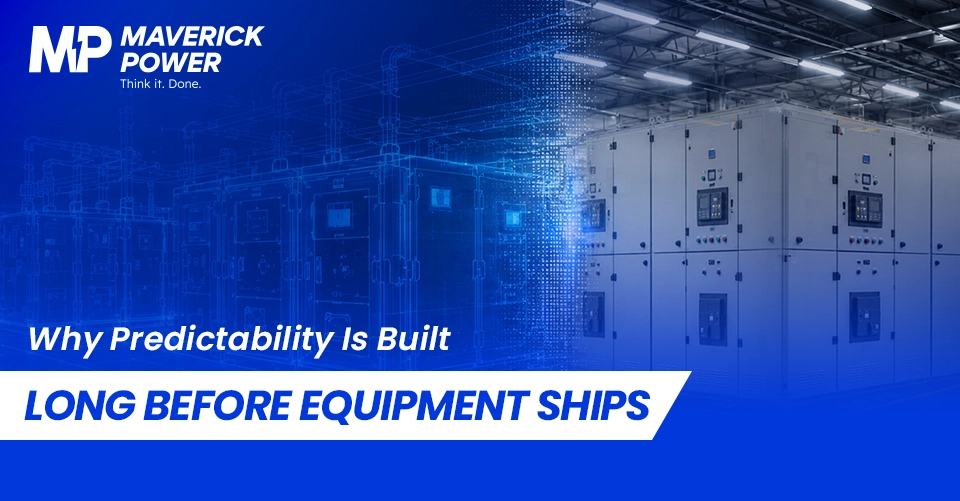
For years, predictability in infrastructure projects was viewed through a relatively simple lens. If equipment was available, schedules were realistic, and teams executed against plan, then projects generally moved forward as expected.
Predictability has changed.
Critical infrastructure projects are now larger, more interconnected, and more dependent on coordination across multiple organizations than ever. Engineering must align with procurement. Manufacturers must coordinate with suppliers. Contractors, operators, commissioning specialists, and project stakeholders all influence whether a project moves cleanly or begins to drift. At the same time, deployment expectations continue to accelerate, especially in sectors such as data centers, where AI and high-density computing are driving unprecedented demand for new capacity.
The industry’s response reflects that pressure. Companies are investing in more integrated delivery approaches, modular deployment strategies, and tighter coordination across engineering, procurement, manufacturing, and project execution. As the work becomes more complex, the cost of uncertainty rises. Issues that once might have been corrected later in the project can now disrupt multiple teams, timelines, and phases. Predictability can no longer depend on reacting quickly when problems appear. It depends on reducing uncertainty before execution begins.
The challenge today is not simply delivering equipment. The organizations that do that consistently understand that predictability is rarely created during execution. It is built through the planning, engineering, coordination, and risk reduction that happen long before production begins.
Most Project Disruptions Begin Long Before Production Starts
When projects become unpredictable, manufacturing is often where the disruption becomes visible. Production schedules shift. Deliveries move. Teams scramble to address unexpected issues. Because these problems surface during execution, it is easy to assume they originated there as well. In reality, many project disruptions begin much earlier.
An incomplete scope definition can create confusion about requirements months later. A design assumption that goes unchallenged during engineering may require revisions after procurement activities have already begun. A bill of materials that lacks accuracy can create sourcing challenges that affect production readiness. Long-lead components that are not identified early enough can introduce constraints that become difficult to overcome later in the project lifecycle.
The same pattern appears repeatedly across complex infrastructure projects. What initially looks like a manufacturing issue often traces back to decisions, assumptions, or information gaps that existed long before production started.
This is one of the clearest operational realities identified throughout Maverick Power’s internal assessments. Teams consistently emphasized the importance of engineering release discipline, procurement visibility, forecasting, long-lead management, and proactive risk identification because each of these activities helps reduce uncertainty before it has an opportunity to create downstream disruption.
The challenge is not that uncertainty exists. Every project contains uncertainty. The challenge is identifying and addressing it while there is still flexibility to act.
By the time uncertainty becomes visible during production, options are often more limited, and corrective actions become more costly. The organizations that achieve predictable outcomes understand this dynamic. Rather than waiting for issues to surface, they focus on reducing uncertainty upstream, where risks can be addressed before they influence execution.
Predictability problems rarely begin as production problems. More often, they begin as unresolved uncertainty that remained hidden for too long. By the time those issues become visible during execution, much of a project’s predictability has already been determined by the decisions made upstream.
Why Preparation Creates Predictability
The organizations that create the most predictable outcomes share a common characteristic. They invest significant effort in preparation long before production begins.
Preparation is more than a planning exercise completed before work begins. It establishes the conditions that allow engineering, procurement, manufacturing, and project teams to execute with greater confidence as projects become more complex and delivery expectations continue to accelerate.
The process begins with scope definition and project alignment. Teams must establish a clear understanding of requirements, responsibilities, objectives, and constraints before work progresses into engineering and procurement. Misalignment at this stage often becomes far more expensive to correct later.
Front-end engineering plays an equally important role. Early engineering decisions influence procurement strategies, manufacturing readiness, testing requirements, and operational performance. Validating assumptions early helps prevent revisions that can introduce unnecessary complexity further downstream.
Design reviews and cross-functional collaboration provide another layer of protection. Bringing engineering, procurement, manufacturing, quality, and project management perspectives together helps identify issues that may not be visible within a single discipline. Risks are easier to address when they are discovered during planning than when they emerge during execution.
Quality reviews serve a similar purpose. The strongest organizations treat quality as a process that begins long before production rather than an activity performed after work is complete. Validation checkpoints, design reviews, documentation reviews, and readiness assessments help confirm that projects are moving forward on a solid foundation.
This emphasis on early visibility and coordination is also reflected across the broader industry. For example, Schneider Electric, AVEVA, and ETAP have collaborated to improve digital integration across electrical design and operations, enabling better visibility into systems before execution begins. These efforts reinforce the importance of identifying risks and improving coordination earlier in the project lifecycle.
Throughout Maverick Power’s operations, these disciplines work together to create greater consistency and reduce avoidable surprises. Scope alignment, engineering coordination, design validation, quality reviews, and cross-functional communication all contribute to a common objective: reducing uncertainty before production begins.
Predictability is not created by moving faster. It is created by preparing more thoroughly. The work required to create predictable outcomes begins long before equipment enters production.
Visibility Across Procurement and Supply Chains Matters More Than Ever
As infrastructure projects become more dependent on specialized electrical equipment, integrated systems, and long-lead components, visibility has become increasingly important to predictable execution. Procurement is no longer a function that operates independently from engineering and manufacturing. Decisions made in one area can quickly influence outcomes in another.
The strongest engineering organizations recognize this connection early. They work to identify material constraints, maintain visibility into supplier commitments, align procurement activities with engineering requirements, and address potential risks before production begins. The objective is not simply to secure materials. It is to create the visibility and coordination that allow projects to move through production with greater predictability.
This challenge has become more pronounced as infrastructure systems grow more complex. Lead times can fluctuate. Design requirements can evolve. Supplier capacity can shift in response to changing market conditions. Without visibility into these factors, teams often find themselves reacting to issues after they have already affected execution.
The broader industry is responding in similar ways. Initiatives such as the Open Compute Project (OCP) bring together equipment manufacturers, technology providers, and infrastructure leaders to develop open standards that improve alignment across next-generation data center infrastructure. By encouraging greater alignment across the ecosystem before deployment begins, these efforts strengthen coordination, improve interoperability, and help organizations prepare for increasingly complex infrastructure projects. As a gold member of the Open Compute Project, Maverick Power actively participates in these industry efforts, reflecting its commitment to disciplined engineering, collaboration, and more predictable project execution.
At Maverick Power, procurement visibility, forecasting, supplier coordination, and long-lead management all contribute to the same objective. The more clearly teams understand potential constraints before production begins, the more effectively they can manage risk and maintain predictable outcomes.
Greater visibility allows teams to identify constraints earlier, coordinate more effectively, and create the conditions for predictable execution long before production begins.
Predictability Is an Engineered Outcome
By the time production begins, much of a project’s predictability has already been established.
Scope alignment, engineering rigor, procurement planning, quality reviews, risk mitigation, and cross-functional coordination all influence how smoothly a project moves through execution. None of these activities guarantees success on its own. Together, however, they create the foundation that allows organizations to deliver with greater consistency and confidence.
This is why the most successful teams approach preparation as a discipline rather than an administrative exercise. They understand that predictability does not emerge during manufacturing. It is created through hundreds of decisions made before production ever starts. Every validated assumption, every coordinated handoff, every identified risk, and every resolved uncertainty contribute to a more reliable outcome later.
Customers often focus on lead times because they are easy to measure. The more important question is how much uncertainty has been removed before production begins, because that work ultimately determines how predictable the outcome will be.
At Maverick Power, reducing uncertainty starts with engineering alignment, planning discipline, procurement coordination, validation processes, and operational readiness. The goal is not simply to move equipment through production. The goal is to create an environment where customers can move forward with greater confidence because potential risks have been addressed before they become execution challenges.
Predictable Outcomes Rarely Happen by Accident
The most visible moments in a project often receive the most attention, but they rarely tell the whole story. By the time equipment enters production, much of a project’s predictability has already been established through the planning, engineering, and coordination that came before it. Delivery dates and production milestones simply make visible the results of planning, engineering, procurement, validation, and risk management decisions made much earlier.
The organizations that create the most predictable outcomes recognize that preparation is not separate from execution. It is what makes disciplined execution possible. They invest in aligning requirements, validating assumptions, coordinating across teams, and reducing uncertainty before work reaches production because that is where predictability is created. As projects continue to grow in complexity, this ability to prepare proactively becomes one of the strongest drivers of reliable execution.
Predictable outcomes are built through disciplined preparation applied consistently throughout the project lifecycle.
The organizations that create the most confidence for their customers understand a simple truth: predictable outcomes begin long before equipment ships.
About Maverick Power
Maverick Power is an embedded original equipment manufacturer (EOEM) that engineers, integrates, manufactures, tests, and supports factory-built power infrastructure for data centers, healthcare facilities, industrial operations, and other mission-critical environments. By combining engineering expertise, operational discipline, rigorous testing, and lifecycle support within a unified delivery model, Maverick helps customers move from design intent to reliable operational performance with greater confidence and accountability.
Partner With Maverick Power
If your next project depends on predictable outcomes, the foundation for that success is established long before production begins. Connect with Maverick Power to learn how disciplined planning, engineering alignment, procurement visibility, and operational readiness can help reduce uncertainty and create greater confidence throughout the project lifecycle.